
NUTN Partners with Hualien Special Education School to Build a Campus Risk Map
[Report by the Center for Gender Empowerment and Sexual Assault Prevention, NUTN]
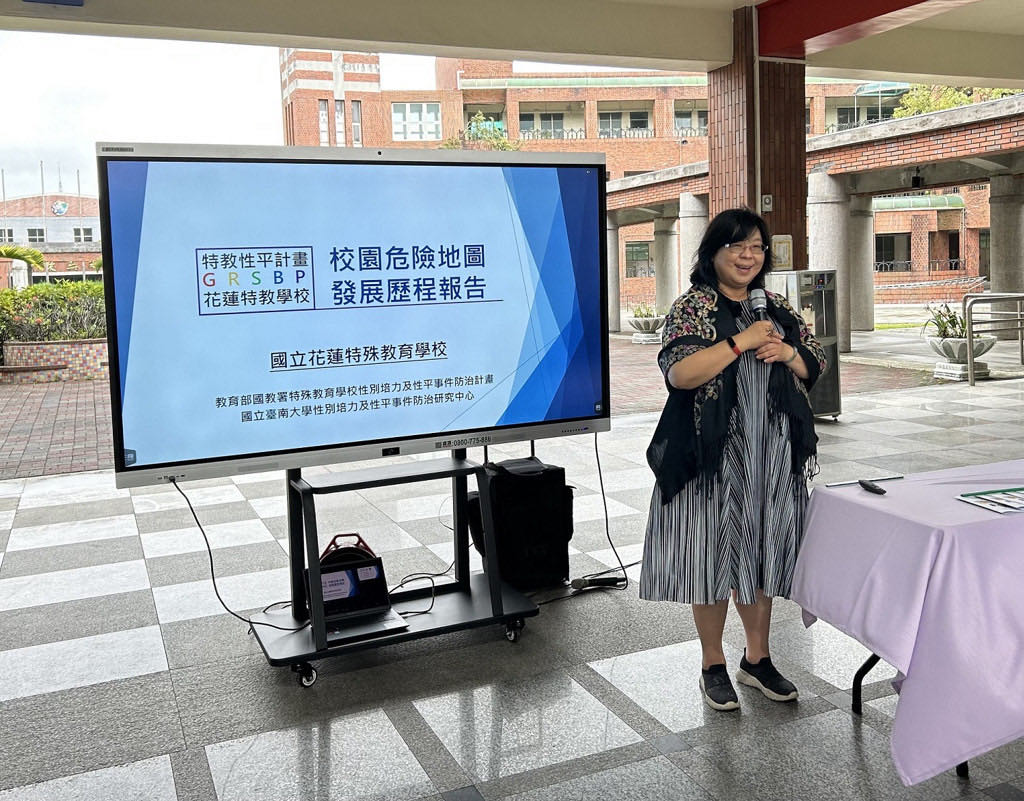
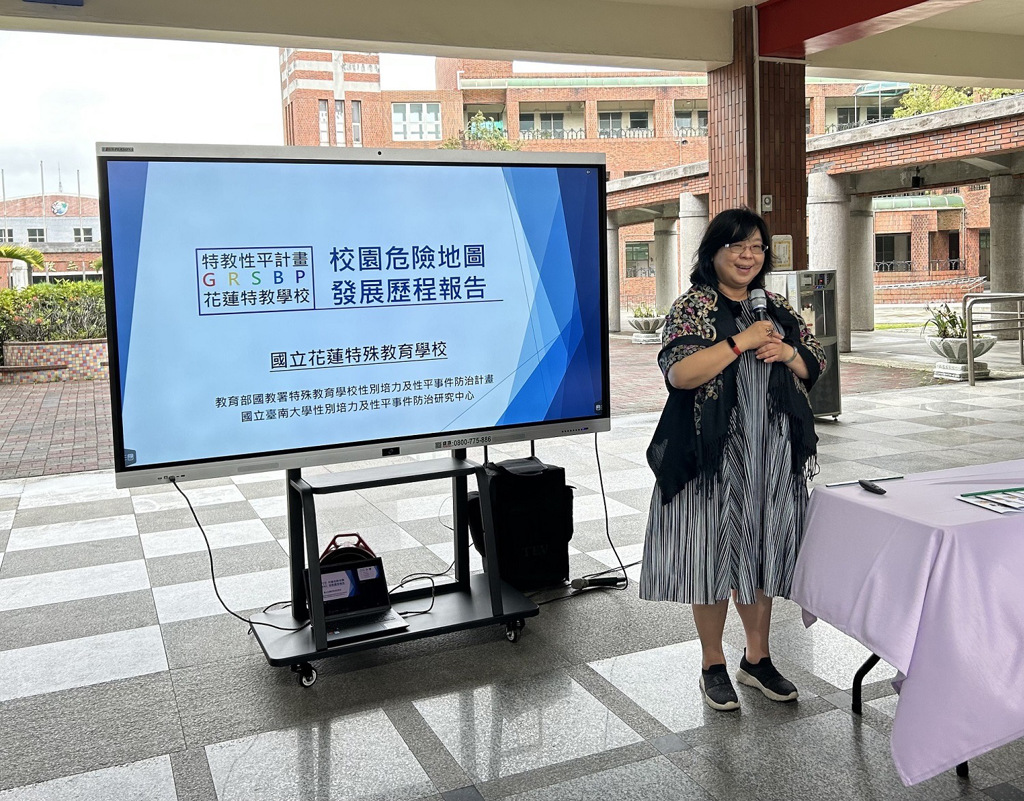
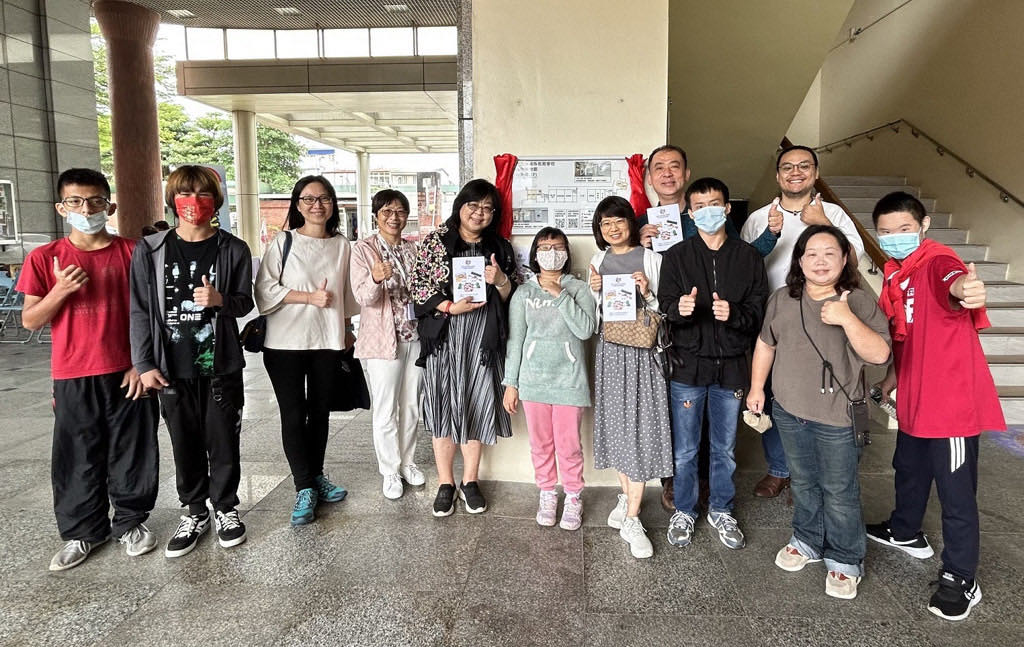
To advance gender equity on campus and strengthen the prevention of gender-related incidents, the Center for Gender Empowerment and Sexual Assault Prevention at NUTN — commissioned by the K-12 Education Administration, Ministry of Education, to run the Gender Empowerment and Incident Prevention Program for Special Education Schools — worked with the National Hualien Special Education School to produce a student-centered campus risk map. The unveiling ceremony was held at the school on May 8, where Principal Ma Hsin-cheng and Center Director Lu Ming-chen jointly presented this wish for "barrier-free spaces and a friendly campus" to every teacher and student.
Under Article 4, Paragraph 2 of the Ministry of Education's Regulations on the Prevention of Campus Sexual Assault, Sexual Harassment and Sexual Bullying, schools must record spaces where gender-related incidents have occurred and draw up a campus risk map. Referring to the Ministry's handbook on gender-bias-free campus spaces, the team photographed and annotated high-risk and risk-prone spaces on site, so that users can identify points requiring attention more easily through real photographs. For the first time, VR spatial recording was also incorporated, allowing students to explore the campus environment from the classroom without limits of space or mobility, maximizing the preventive value of the map. In the future, the risk map will be integrated into coursework, guiding students to understand the campus environment, the risks of each space, and how to seek help — and to extend what they learn in class to everyday life.
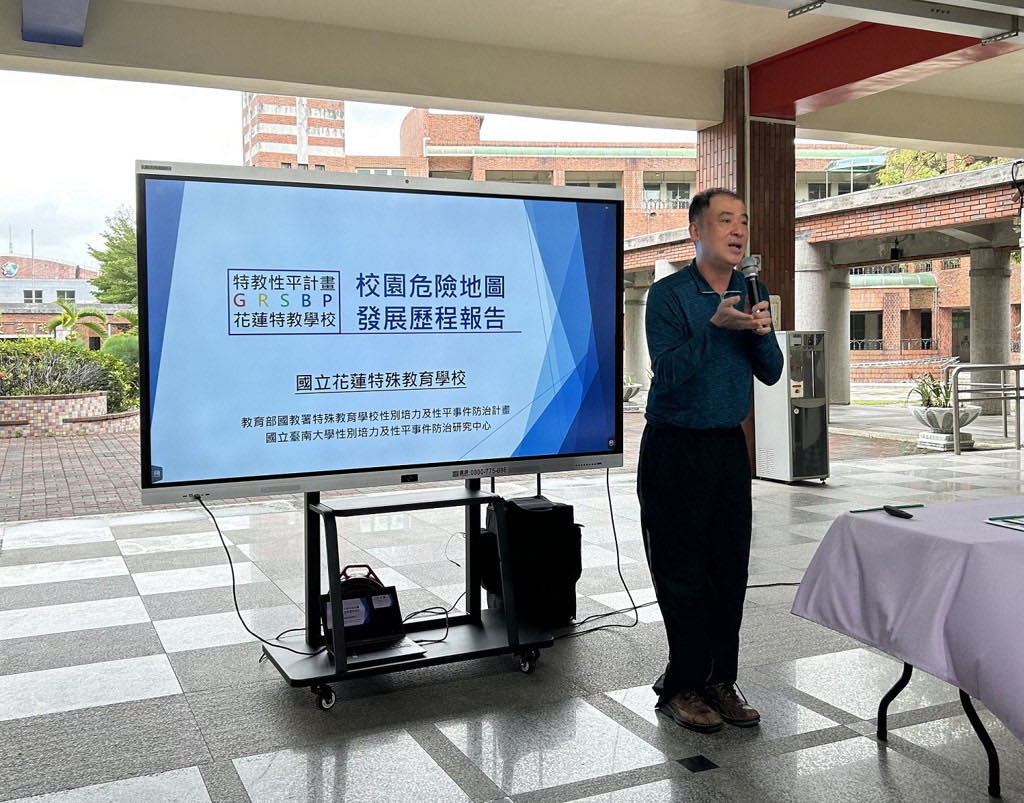
Principal Ma and Director Lu jointly expressed the hope that building the risk map and integrating it into the curriculum will improve students' awareness of spatial safety, while realizing the social participation of persons with disabilities and children emphasized in the CRPD and the CRC. Through students' participation and feedback, the campus can become a space that is safe, friendly and barrier-free for all its users.